
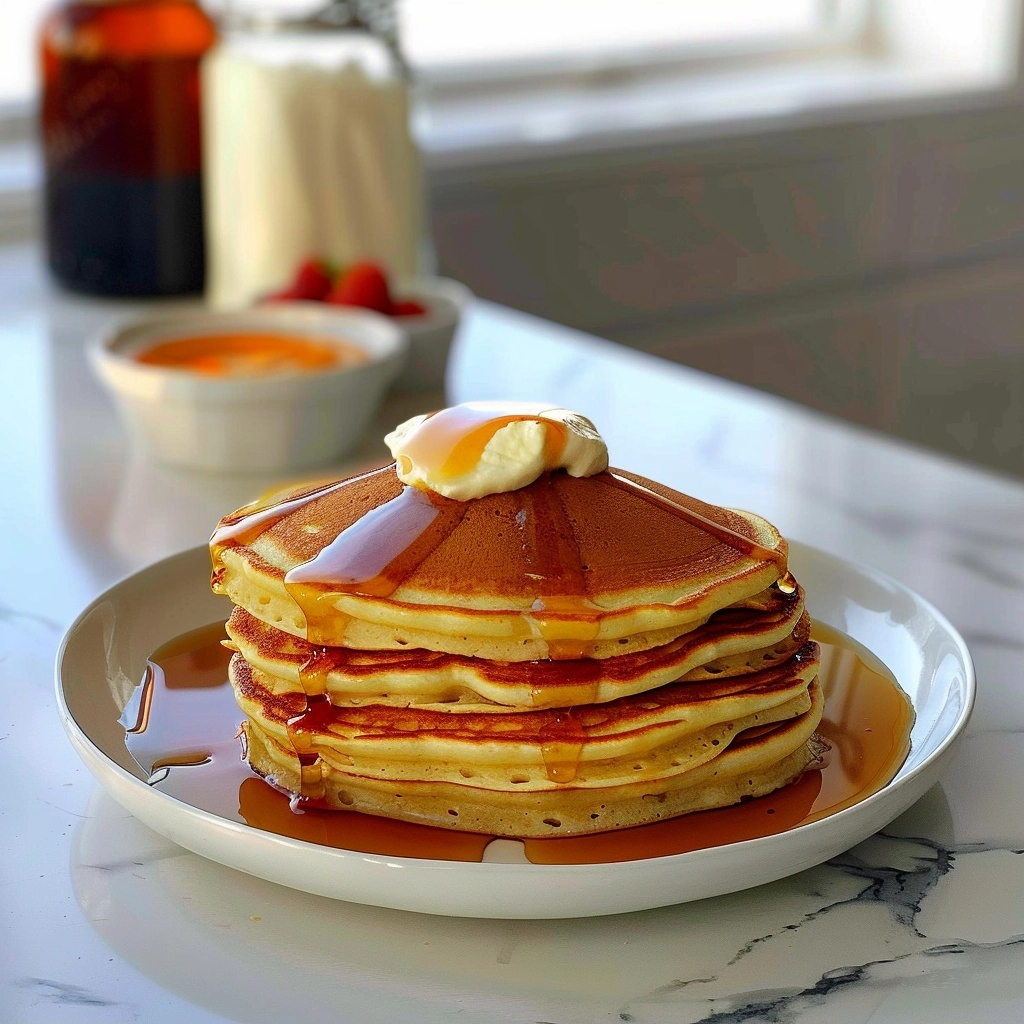
I remember my grandmother bustling around the kitchen on Saturday mornings, the air filling with the sweet, comforting scent of buttermilk pancakes. Sometimes, my attempts as a child resulted in flat, sad disks rather than fluffy clouds, but she always encouraged me, showing me that a few simple ingredients and a little patience could create something truly special. These buttermilk pancakes are my homage to those mornings, a recipe designed to bring that same warmth and joy to your table.
Recipe Overview
| Prep Time | Cook Time | Total Time | Servings | Difficulty | Cuisine |
|---|---|---|---|---|---|
| 10 minutes | 15-20 minutes | 25-30 minutes | 6-8 | Easy | American |
Ingredients
Gathering the right ingredients is the first step to pancake perfection. For these delightful buttermilk pancakes, you’ll need:
- 1 1/2 cups all-purpose flour: The foundation of any great pancake.
- 2 teaspoons baking powder: This leavening agent is key for that signature fluffiness.
- 1/2 teaspoon baking soda: Works with the buttermilk to create an airy texture.
- 1 Tablespoon sugar: Just a touch to balance the tang of the buttermilk and enhance browning.
- 1/4 teaspoon salt: Balances sweetness and enhances overall flavor.
- 1 1/2 cups buttermilk or buttermilk substitute: This is where the magic happens! For a substitute, use 1 1/2 cups milk with 1 1/2 tablespoons lemon juice or white vinegar, let it sit for 5 minutes.
- 1 large egg: Binds the ingredients together and adds richness.
- 2 Tablespoons unsalted butter, melted: For a touch of richness and to help prevent sticking.
Timing
With a total time of 25-30 minutes from start to finish, these buttermilk pancakes are remarkably quick to prepare, making them ideal for busy mornings or spontaneous brunch plans. The prep time is a mere 10 minutes, leaving you with about 15-20 minutes for the actual cooking. This is substantially faster than many other breakfast recipes, allowing you more time to enjoy your meal.
Step-by-Step Instructions
Step 1: Combine Dry Ingredients
In a large bowl, whisk together the all-purpose flour, baking powder, baking soda, sugar, and salt. This initial step ensures that the leavening agents and seasonings are evenly distributed, which is crucial for consistent texture and flavor in every bite of your buttermilk pancakes.
Step 2: Combine Wet Ingredients
In a separate medium bowl, whisk together the buttermilk (or your prepared substitute), the large egg, and the melted unsalted butter. Giving these a good whisk will emulsify the mixture, ensuring it blends smoothly with the dry ingredients.
Step 3: Gently Combine Wet and Dry
Pour the wet ingredients into the bowl with the dry ingredients. Stir them together using a whisk or a spatula just until combined. It is absolutely vital that you do not overmix! A few lumps in the batter are perfectly fine and actually desirable for tender buttermilk pancakes. Overmixing develops the gluten, leading to tough, rubbery pancakes.
Step 4: Heat and Grease the Pan
Place a nonstick pan or griddle over medium-low heat. It’s important not to rush this step. Let the pan heat up thoroughly, then lightly grease it with a neutral oil. A properly heated pan ensures even cooking and prevents sticking, giving you beautifully golden-brown buttermilk pancakes.
Step 5: Cook the Pancakes
Using a ladle or measuring cup, drop dollops of the batter onto the hot griddle. Aim for about 1/4 cup of batter per pancake for a classic size. Once you see bubbles forming on the surface of the pancakes and the edges look set, it’s time to flip. Cook for another 1 to 2 minutes on the second side, until the pancakes are cooked throughout. You’re looking for a beautiful golden-brown color.
Step 6: Serve Immediately
Serve your freshly made buttermilk pancakes immediately. The best way to enjoy them is straight off the griddle, warm and fluffy, paired with your favorite toppings.
Nutritional Information
A typical serving of buttermilk pancakes (approximately 2 medium pancakes) provides about 250-300 calories, depending on toppings. They offer around 8-10 grams of protein from the egg and flour, 10-12 grams of fat primarily from butter and oil, and 35-40 grams of carbohydrates. While they are a delicious treat, they are also a good source of energy to start your day. For more detailed insights, consider the specific ingredients and portion sizes used in your preparation.
Healthier Alternatives for the Recipe
To make these buttermilk pancakes even more health-conscious, consider a few simple swaps. You can incorporate whole wheat flour for added fiber, or a mix of all-purpose and whole wheat. For a touch of sweetness without added sugar, try using mashed ripe banana or unsweetened applesauce in place of some of the sugar and a bit of the fat. Adding a handful of fresh or frozen berries to the batter just before cooking can also boost the antioxidant content. When selecting fruit, keep in mind that fresh vs. frozen fruit can offer slightly different textures and nutrient profiles, but both are wonderful additions.
Serving Suggestions
The beauty of buttermilk pancakes lies in their versatility. Of course, the classic pairing is warm maple syrup drizzled generously over the stack. I also love adding a dollop of Greek yogurt for a creamy, tangy contrast, or a scattering of fresh fruits like berries or sliced bananas. A sprinkle of cinnamon or a dusting of powdered sugar can also elevate their charm. For a more decadent treat, a light drizzle of honey or a spoonful of fruit compote works wonderfully.
Common Mistakes to Avoid
- Overmixing the Batter: As mentioned, this is the most common pitfall. Lumpy batter yields tender pancakes; smooth batter yields tough ones.
- Pan Too Hot: If your griddle is too hot, the outside will burn before the inside cooks. Medium-low heat is your friend for even cooking.
- Not Letting the Batter Rest (Optional but recommended): Allowing the batter to sit for 5-10 minutes after mixing can help the flour absorb the liquid, leading to even fluffier pancakes.
- Flipping Too Early or Too Late: Wait for those bubbles to appear and the edges to set before flipping.
Storing Tips for the Recipe
Leftover buttermilk pancakes can be stored in an airtight container or wrapped tightly in plastic wrap in the refrigerator for 2-3 days. To reheat, a few seconds in the microwave or a quick toast in a toaster or on a griddle works best. For longer storage, you can freeze them. Place them in a single layer on a baking sheet until firm, then transfer to a freezer bag or container. They’ll keep well for up to 2-3 months. For more comprehensive food storage advice, a good food storage guide can be incredibly helpful.
Conclusion
These buttermilk pancakes are more than just a breakfast item; they’re an invitation to slow down, connect, and savor the simple pleasures. With this straightforward recipe, you can achieve that perfect balance of fluffy texture and delightful tang, creating memorable moments around your own kitchen table. Give them a try, and I’m confident they’ll become a cherished part of your breakfast repertoire. Don’t hesitate to share your own tips and creations in the comments below!
FAQs
- Q: What makes buttermilk pancakes so fluffy?
A: The combination of baking soda reacting with the acidity in buttermilk creates carbon dioxide gas, which makes the pancakes rise and become fluffy. - Q: Can I make my own buttermilk substitute?
A: Absolutely! For every cup of milk needed, add 1 tablespoon of white vinegar or lemon juice, let it sit for 5-10 minutes until it thickens slightly. - Q: My pancakes are sticking to the pan, what should I do?
A: Ensure your pan is adequately heated over medium-low heat and properly greased. Using a good quality nonstick pan also makes a significant difference. - Q: Can I add anything to the batter?
A: Yes! Fresh or frozen berries, chocolate chips, or even a handful of chopped nuts can be gently folded into the batter just before cooking. - Q: Why are my pancakes flat?
A: This is usually due to overmixing the batter, using old baking powder/soda, or not heating the pan properly.
Buttermilk Pancakes: The Ultimate Guide
Nostalgic, fluffy American pancakes with a tangy buttermilk backbone. A simple, quick recipe using everyday ingredients for breakfast bliss, honoring a cherished family tradition with easy-to-follow steps.
- Prep Time: 10
- Cook Time: 20
- Total Time: 30
- Yield: 8 pancakes 1x
- Category: Breakfast
- Method: Baking
- Cuisine: American
- Diet: Vegetarian
Ingredients
1 1/2 cups all-purpose flour
2 teaspoons baking powder
1/2 teaspoon baking soda
1 tablespoon sugar
1/4 teaspoon salt
1 1/2 cups buttermilk or buttermilk substitute (milk with 1 1/2 tbsp lemon juice/vinegar)
1 large egg
2 tablespoons unsalted butter, melted
Instructions
Whisk flour, baking powder, baking soda, sugar, and salt in a large bowl
In a medium bowl, whisk together buttermilk substitute, egg, and melted butter
Gradually mix wet ingredients into dry ingredients until just combined
Rest batter 5-10 minutes
Heat a Non-stick griddle or skillet over medium heat
Pour 1/4 cup batter per pancake and cook until bubbles form on surface and edges are set, 2-3 minutes
Flip and cook until golden, 1-2 minutes
Repeat with remaining batter
Notes
Do not overmix the batter for best rise
Use a non-stick surface to avoid using oil for greasing
Serve with maple syrup, fresh berries, or jam
Halal-friendly version: ensure butter is from vegetarian sources and use lemon juice instead of vinegar for a cleaner flavor profile
Nutrition
- Serving Size: 1 pancake
- Calories: 175
- Sugar: 1g
- Sodium: 160mg
- Fat: 5g
- Saturated Fat: 3g
- Carbohydrates: 23g
- Fiber: 0.8g
- Protein: 4g
- Cholesterol: 40mg